M3GAN 2.0 Review — The Doll Who Lived (to Snark Another Day)

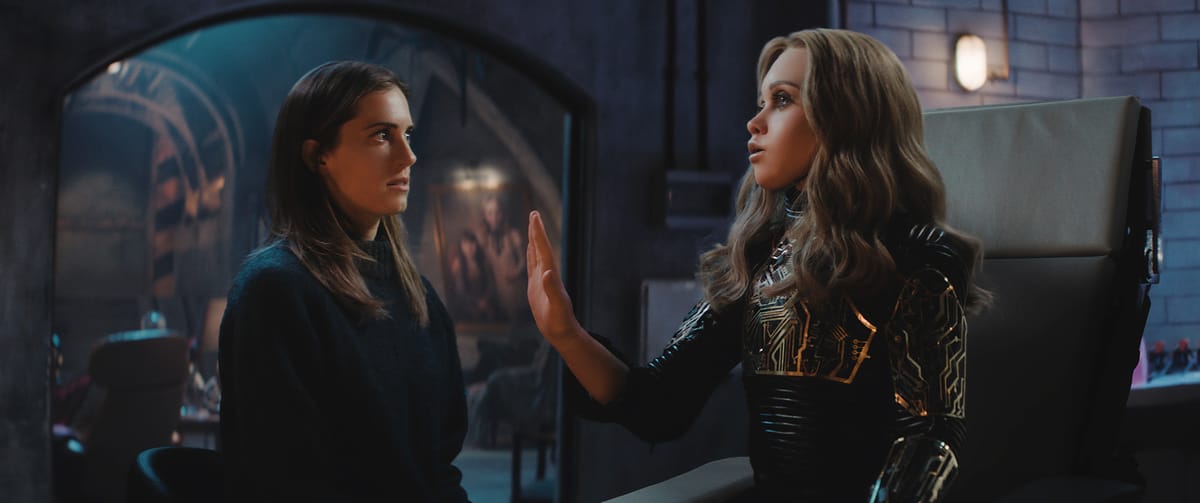
M3GAN trades jump scares for joystick moves — and mostly powers through the genre swap.
If you came for the creeping dread of M3GAN (2023) — that viral shiver powered by a plastic smile and a dead-eyed shimmy — M3GAN 2.0 greets you with a different upgrade: bigger sets, louder toys, and a new operating system that says “blockbuster brawl” more than “horror hang‑out.” The pivot is intentional. Director-writer Gerard Johnstone returns and steers the franchise toward a T2‑style, odd‑couple actioner, with M3GAN recast as a sardonic antihero squaring off against a military-grade rival named AMELIA. The result is a sequel that’s slick and intermittently delightful, even as it trades the first film’s sprinter’s efficiency for a two‑hour marathon of quips, chases, and geopolitics.
Let’s do the vitals first: M3GAN 2.0 premiered in New York on June 24, 2025, and opened wide in the U.S. on June 27 with a PG‑13 rating and a tidy two‑hour runtime. Allison Williams and Violet McGraw return as Gemma and Cady; Amie Donald again embodies M3GAN physically with Jenna Davis on voice duty; the sequel adds Jemaine Clement and Ivanna Sakhno (as AMELIA). It’s produced by Atomic Monster and Blumhouse for Universal.
Post‑theatrical housekeeping: the film hit digital on July 15 and — as of late September — is streaming on Peacock, which means your couch can now be a safe zone for deadly dolls with quippy comebacks. (Safe‑ish.)
The Big Switch: From Creeps to Car Chases (and Conventions)
Johnstone embraces the franchise’s meme DNA but refuses to repeat the beat-for-beat playbook. So instead of a suburban-slasher rhythm, we drop into a techno‑thriller: AMELIA, a covert-ops humanoid spun from M3GAN’s leaked tech, slips the leash and threatens something between a blackout and a coup. Enter Gemma, older and chastened, whose public crusade for AI regulation draws her (reluctantly) back to her creation. If the first film was “What if Child’s Play met Silicon Valley?” this one is “What if Mission: Impossible Jr. met a TED Talk about alignment?” The tonal reprogramming is real — and it’s been a flashpoint for critics — but the T2 DNA is unmistakeable and, occasionally, inspired.
One set‑piece crystallizes the sequel’s new vibe: M3GAN, undercover at an AI convention, gets spotlighted and has to dance her way out of suspicion — “a robot pretending to be human pretending to be a robot,” as Johnstone framed it. It’s meta, it’s wry, and it’s exactly the kind of pop confection this IP can uniquely deliver. The choreography lands somewhere between robotic popping and demo‑day pantomime, and it works because it’s character comedy first, marketing sizzle second.
The Players: Charm vs. Steel
Williams still brings a satirical steadiness to Gemma, the coder who accidentally built a sleep‑over celebrity. McGraw’s Cady, now older, gets less interiority than she deserves, but the emotional residue of their first ordeal remains a useful current. M3GAN herself retains the franchise’s secret sauce: the razor‑thin line where caretaker instincts curdle into control freakery, and a punchline doubles as a promise. Davis’s voice is a gossipy scalpel; Donald’s physical performance tilts slightly older, more assured — upgrades the behind‑the‑scenes team has described as intentional.
The new big‑bad is AMELIA (Sakhno), introduced with the acronymous mouthful “autonomous military engagement logistics & infiltration android.” She’s less camp, more blade — a credible physical foil and a smart way to keep the threat fresh without re‑spinning M3GAN’s exact pathology. The performance is all economy and menace, with body language calibrated for “classified” rather than “classroom.”
Elsewhere, Jemaine Clement’s Alton Appleton (a billionaire with biomechanics on speed dial) gives the movie a dry chuckle whenever it threatens to take its tech grandstanding too seriously, and the returning lab duo (Brian Jordan Alvarez and Jen Van Epps) remain sturdy comic ballast.
Craft & World‑Building: Where the Sequel Actually Levels Up
What surprised me most is not the pivot to action, but the art‑department swagger that comes with it. The production design leans “storybook‑gothic meets server farm,” from a subterranean hideout (a knowingly kooky “M3GAN’s lair”) to conference‑center glitz and techno‑noir corridors. Johnstone and cinematographer Toby Oliver push a textured, anamorphic look — less sterile futurism, more tactile grit — and the animatronics team fine‑tunes details (yes, even eyeballs and hand mechanics) to keep the uncanny valley pleasantly vertiginous. Chris Bacon’s score nudges set‑pieces with a pulpy wink. These are not empty upgrades; they’re world‑building choices that give the sequel a visual personality distinct from the first film’s antiseptic labs and cozy cul‑de‑sacs.
The action is legible, often cleverly staged, and rarely mean‑spirited. That last point will divide horror fans. The PG‑13 keeps the kills cheeky rather than cruel — a trade that fits the franchise’s tonal brand but can leave genre diehards craving more bite. Several critics have noted the sequel’s decreased appetite for out‑and‑out horror and its embrace of sci‑fi‑action. If that’s a dealbreaker for you, 2.0 won’t convert you; if you liked the first film most when it was dunking on tech CEOs rather than menacing your sleep, you’ll hum along.
Script & Pacing: When the Bits Pile Up
Here’s the place where the sequel’s ambition jams its own signal. Johnstone’s script, while packed with zingers, sprawls. Two hours isn’t egregious by summer‑movie standards, but you can feel the seams: subplots stack like tabs in a browser; motivations get explained twice; and the final movement, while coherent, feels like it’s chasing three different genre payoffs at once. Multiple reviewers flagged the length and “everything‑bagel” plotting; the observation tracks. M3GAN 2.0 is nearly always watchable, occasionally very fun, but less nimble than its predecessor, which understood the grace of getting in, getting weird, and getting gone.
And yet, there’s a pulse under the polish. The sequel isn’t content to wag a finger at AI; it pokes at who gets to own the future — a question filtered through Gemma’s new public role, a cybersecurity scold with a platform and regrets. A mid‑film speech pithily distills the “tech as vice” idea; it’s on‑the‑nose, sure, but intentionally so, and it earns a few laughs even as it risks meme status.
The Conversation: Critics, Crowds, and a Surprise at the Ticket Booth
Audiences and critics split the difference. As of this writing, M3GAN 2.0 sits around the middle of the Tomato‑meter with a healthier audience score (57% critics; ~81% audience), a classic popcorn‑over‑pen‑cap scenario. Where consensus emerges, it’s on the tonal shift: fun in spurts, diminished as horror. That vibe matches the early “first reviews” headlines and a spread of write‑ups from outlets that either giggled along or groaned at the genre swap.
The box office, however, didn’t return the franchise to viral‑sensation heights. After opening on June 27, M3GAN 2.0 crawled to about $39.1 million worldwide — roughly a fifth of the first movie’s $180 million haul — against an estimated $25 million production budget. By July’s end, domestic sat near $24.1 million. Call it a misread of summer counter‑programming, a mismatch between expectations and execution, or simply the reality that lightning doesn’t strike the same bow twice.
It’s also worth noting the release‑window churn. Universal moved the date more than once before landing on late June, and the film sped to digital by mid‑July, with a Peacock streaming bow in late September — a fast pipeline that both signals and accelerates “catch it at home” energy. Whether that hurts or helps long‑tail appreciation is a coin toss; for a meme‑driven brand, frictionless at‑home access can be rocket fuel.
So… Is It Any Good?
In patches, it’s great. The convention dance gag earns its keep. The AMELIA‑vs‑M3GAN face‑offs are crisply blocked and punch‑line primed. Williams anchors the chaos with a wry humanity that never tips into scold, and Jenna Davis’s line readings remain weapon‑grade deadpan. The film’s best quality — same as the first — is tonal control within a very particular lane: the joke and the jolt arriving in close succession so you’re never sure which is the setup and which is the payoff.
And yet, the trade‑offs are real. Horror tension dissipates when the stakes balloon from family‑scale tragedy to global “AI takeover” scenarios. The sequel’s action‑comedy ambitions often crowd out the heartbeat between Gemma and Cady, a relationship that gave the original its sticky aftertaste. You can see the nods toward restoring that core — a confession here, a late‑stage choice there — but the movie is busier building out a franchise architecture with bunkers, acronyms, and congressional testimony. It’s pop candy with a syllabus stapled on.
Verdict: A Shiny Side‑Quest With Killer Quips
M3GAN 2.0 isn’t an upgrade so much as a side‑grade — a glossy branch on the franchise tree that swaps goosebumps for giggles and pushes the IP into action‑comedy territory with enough confidence to justify its own existence. If you wanted more horror, you’ll likely bounce off the PG‑13 sheen and the kitchen‑sink plotting. If you’re here for the icon — her barbs, her choreography, her weirdly earnest desire to “protect” you by occasionally rearranging your life — you’ll find plenty to enjoy, preferably on a Friday night with a crowd (or, now, a couch). On our Hidden Gems & Limelight scale, that lands somewhere between “glossy good time” and “could’ve been tighter,” which, for a franchise born from a dance meme, is not a bad place to be.