Two Pattinsons, One Planet, Multiple Headaches: Bong Joon‑ho’s Mickey 17 Is a Shaggy, Sharp Satire

On the ice world of Niflheim, a cloned “Expendable” keeps dying for capitalism — and somehow learns how to live. Our Hidden Gems & Limelight verdict: imperfect, irresistible.
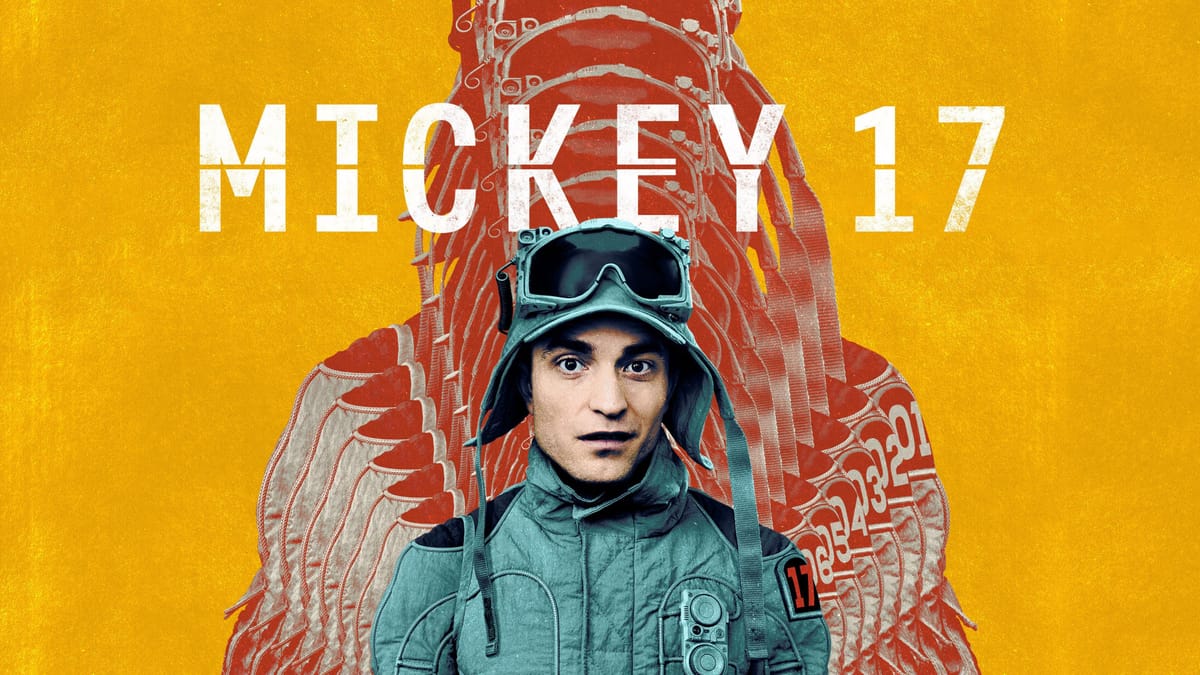
Bong Joon‑ho’s first feature since Parasite arrives like a snowball that’s accumulated a decade’s worth of obsessions on its downhill roll: class warfare, colonization, the gig economy turned literal, and the comic indignity of the human body. Mickey 17 (rated R, 137 minutes) stars Robert Pattinson as an “Expendable,” a disposable colonist whose contract is basically “die for the company, get reprinted, repeat.” On paper that’s grim, but in Bong’s hands it’s a mordantly funny sci‑fi about identity and the systems that sell it to the highest bidder.
If the rollout felt like a saga—completed long before it opened, then delayed and reshuffled amid strikes and schedule chess—that’s because it was: world premiere in London on February 13, 2025, Berlin Festival bow two days later, U.S. theaters on March 7. The director himself has said the strikes slowed things down but gave the team more time to finish the movie, a rare instance of delay as creative gift rather than calamity.
“Have a Nice Death”: The Setup
Set in 2054, the film strands Mickey Barnes on the frozen planet Niflheim, where a bad day at work means a fatal one. When Mickey 17—yes, he’s the seventeenth printout—stumbles home from a mission presumed dead, he discovers management has already printed Mickey 18 to replace him, despite a no‑multiples rule that would make any HR department sweat. The result is a twisted odd‑couple story: two Pattinsons negotiating love, labor, and the right to exist, sometimes in the same frame and often at cross‑purposes.
Pattinson’s double act is the film’s best special effect: 17 is a bruised puppy; 18 struts with sharp elbows. Naomi Ackie’s Nasha—security officer, girlfriend, moral compass—keeps the story grounded, while Steven Yeun’s Timo embodies the compromises that get people into this mess to begin with. Looming over all of them is Kenneth Marshall (Mark Ruffalo), a televangelist‑turned‑colonist in a bouffant and red‑hated personality cult, and his sauce‑obsessed spouse Ylfa (Toni Collette), a running gag that somehow escalates from cute to queasy.
The Bong Blend (With a New Aftertaste)
Tonally, Mickey 17 feels closer to Okja and Snowpiercer than to Parasite: a shapeshifting cocktail of satire, slapstick, and political fury where the jokes come with bruises. Critics split on the messiness (Variety found it ragged; IndieWire declared it Bong’s best English‑language effort), but most agreed on the movie’s gleeful bite and Pattinson’s go‑for‑broke turn.
Bong also nudges toward what he’s called his first (mostly) happy ending, an optimism that arrives without erasing the costs of survival. The optimism isn’t about institutions; it’s about people refusing to be defined solely by the use‑cases assigned to them. In interviews he’s been explicit: othering is fascism’s root system, and the film’s “Creepers”—Niflheim’s indigenous beings—exist to complicate the colonizers’ simplistic hierarchies.
World‑Building You Can Feel Under Your Boots
The look is cold but never sterile: Darius Khondji’s camera turns frozen blues into bruised poetry, while production designer Fiona Crombie builds spaces that feel sublet by corporate zeal and religious mania. You can practically smell the disinfectant—and the instant ramen. Jung Jae‑il’s score threads melancholy strings through gallows humor, keeping pace with the narrative’s zigzags from locker‑room jokes to moral reckonings.
And then there’s the two‑Pattinson trick photography. Visual effects are less about showboating than about giving the actor room to riff against himself—sometimes lovingly, sometimes with a hostility that suggests a breakup staged in a mirror. The movie weaponizes those deviations: 17’s soft edges vs. 18’s hard, a reminder that self‑improvement and self‑erasure can look alarmingly similar.
The Politics Wears a Bouffant
If subtlety is your red line, this might test your patience. Ruffalo’s Marshall is an unmistakable mashup of TV demagogue and Silicon Valley messiah, surrounded by red‑capped acolytes. For some, that’s blunt; for others, bracing. The Guardian’s review notes how the delays unintentionally sharpened the movie’s timeliness; Vulture called it a “bitterly funny take on America,” and you don’t need a decoder ring to see what they mean.
What keeps the satire from calcifying is Ackie’s Nasha, who blasts through the boys’ club with equal parts tenderness and tactical rage. There’s a late‑film spiel—call it the Nasha Doctrine—that lands like a stun grenade partly because Bong lets a character, not a thesis, deliver it.
From Page to Print (and Re‑Print)
The movie adapts Edward Ashton’s 2022 novel Mickey7, but “adapt” is doing heavy lifting—it’s more a raid than a transcription. ScreenRant cataloged the bigger deviations; Bong keeps the central conceit and moral queasiness but rearranges the furniture, tilting the story toward romance, labor satire, and a gnarlier culture‑clash with the planet’s natives. That elasticity is part of the point: identity, like narrative, can be printed and re‑printed, but meaning is what you make between the lines.
Does the Movie Work?
Mostly—sometimes magnificently—though it’s shaggy enough to sprout icicles. A mid‑act pileup of coups, critters, and corporate coups de théâtre courts chaos, and a few running gags (Ylfa’s sauce quest) feel like they wandered in from a broader farce. But when Mickey 17 locks into its best mode—gonzo compassion—it’s a blast. The Pattinson vs. Pattinson scenes are fizzy and weird and unexpectedly tender; Ackie transforms the movie’s conscience from slogan to beat; and the filmmaking team finds a bracing visual language for life under managerial authoritarianism.
If you demand the diamond‑cut precision of Parasite, this will feel loose; if you relish Bong’s junk‑drawer imagination, it’s a feast with a few spilled drinks.
The State of the Clone‑ion: Reception & Reality Check
On the ledger side, Mickey 17 opened to roughly $19 million domestically and ultimately tallied about $133 million worldwide—respectable for original sci‑fi, but a tough road considering the budget and marketing spend. Analysts projected a theatrical shortfall for Warner Bros., even as the film carved out strong word‑of‑mouth among Bong faithful.
Critically, it fared far better than the doomsayers predicted. As of this writing, Mickey 17 sits around a 77% Tomatometer with audiences in the low‑to‑mid 70s, and a solid‑good Metascore in the low 70s—the picture of “divisive but liked.” If you prefer your numbers clean, those are clean enough; if you prefer your cinema messy, Bong has you covered.
How to Watch (and Re‑Watch)
If you missed it in theaters—or want to clock all the sly intra‑Mickey glances—Mickey 17 is on Max after an April 8, 2025 digital release and quick streaming window, a boon for anyone who craves a pause button mid‑lecture from Marshall.
The Hidden Gems & Limelight Verdict
Bong Joon‑ho prints two Pattinsons and a thousand ideas, then dares you to decide which ones deserve to live. The movie isn’t tidy—and, gloriously, doesn’t want to be. It treats sci‑fi like a playground and politics like snow you can’t stop tasting, even if you know it’s a little dirty. The satire is broad, the heart is bigger, and the filmmaking is alive with curiosity. Mickey 17 may not be Bong’s most precise film, but it might be his most forgiving one, arguing that “expendable” is a label, not a destiny.
Watch it if: you vibed with the chaotic empathy of Okja, like your sci‑fi with jokes and scars, and want to see an actor duel himself without turning it into a mere tech demo.
Skip it if: tonal zigzags make you seasick or you want your satires sharp enough to shave with.
Either way, don’t underestimate a movie that asks whether the 18th draft of yourself is really “you”—and whether that might be a beautiful problem to have.